How to Fix Overproofed Sourdough


You uncover the proofing basket and immediately realize that the dough has gone too far. The loaf looks unusually swollen, the surface feels fragile, and a gentle touch leaves an indentation that does not spring back. When you turn it out, it begins to spread.
It is easy to assume that overproofed sourdough is ruined, but that is not always true. A loaf that has gone slightly too far can often still be baked. Even severely weakened dough can become good pan bread or focaccia.
The right solution depends on how far the dough has gone and whether it still has enough structure to hold a shape.


Overproofed and Overfermented Are Not Quite the Same


The word “overproofed” usually refers to dough that has rested too long after shaping during the final proof. “Overfermented” is a broader term and can describe dough that went too far during bulk fermentation.
The difference matters because shaped dough should not automatically be treated the same way as dough that is still in the bulk fermentation container.
A loaf that overproofed after shaping may still have a good internal structure, but it has used most of its remaining ability to expand. Dough that overfermented during bulk may already have weakened gluten before shaping even begins.
In everyday sourdough baking, the terms are often used interchangeably. Before deciding what to do, look at the dough rather than the name of the mistake.

How to Recognize Overproofed Sourdough


Slightly overproofed dough often looks very full and airy. It may rise higher in the basket than expected and feel softer than usual. A finger pressed gently into the surface leaves a deep mark that returns very slowly or does not return at all.
When turned out, the loaf may settle more than usual but still retain a recognizable shape. This dough can often be baked successfully if you act quickly.
Severely overproofed dough behaves differently. It feels fragile, sticky, and almost foamy. The surface may wrinkle, tear, or begin to sink before baking. After leaving the basket, it spreads rapidly and may partially deflate during scoring.
Dough that has lost nearly all structure may stick heavily to the basket, collapse under its own weight, and resist any attempt to tighten it. At this point, expecting a tall free-standing loaf is unrealistic, but the dough can still be used.

f the Loaf Is Only Slightly Overproofed


When the dough still holds its shape, the best solution is usually to bake it immediately.
Do not give it more time on the counter. If the oven is already hot, turn out the loaf gently, make a simple score, and bake it without delay.
If the oven still needs to preheat, place the dough in the refrigerator while you wait. Cooling slows fermentation and firms the dough, making it easier to handle. The refrigerator will not reverse overproofing, but it can prevent the loaf from weakening further.
Bake cold dough directly from the refrigerator. Avoid letting it warm up again.
Handle the loaf as little as possible. A deep or complicated decorative scoring pattern can cause fragile dough to deflate. One clean, slightly shallower expansion score is usually safer than several deep cuts.
A thoroughly preheated Dutch oven gives soft dough the best support. It also traps steam, allowing the surface to remain flexible during the early part of baking.
The loaf may not develop a dramatic ear, but it can still have a pleasant crumb and good flavor.

Should You Reshape Overproofed Dough?


Reshaping is sometimes recommended as a universal cure, but sourdough does not always recover well from it.
If the loaf is only slightly overproofed and still holds its form, reshaping usually causes more harm than good. It removes gas, damages the existing structure, and creates the need for another final proof. Baking immediately is the safer choice.
Reshaping may be possible when the dough has clearly overproofed at room temperature but still feels elastic and cohesive. In that case, gently press out only the largest gas pockets, form the dough again, and give it a much shorter second proof.
This works best with strong white-flour dough that has not become sticky or fragile. It is less successful with very wet dough, whole-grain dough, or dough that has been fermenting for so long that the gluten has begun to break down.
If the dough tears, smears across the worktop, or cannot create surface tension, stop trying to reshape it. Move to a supported baking method instead.
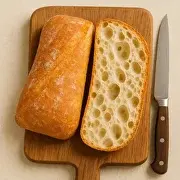
Sometimes a gummy crumb and a dense crumb have the same root cause. If your loaf is heavy, compact, and sticky inside, take a look at our guide on dense sourdough—it may help you identify what went wrong before the dough even reached the oven.
Why Is My Sourdough So Dense?

Use a Bread Pan for Weak Dough


A loaf pan is one of the most reliable ways to save overproofed sourdough.
The pan provides support that the weakened gluten can no longer create on its own. Instead of spreading sideways, the dough is encouraged to rise upward.
Grease the pan and transfer the dough as gently as possible. If it still contains plenty of gas, avoid pressing it down firmly. Smooth the surface with damp fingers or a wet dough scraper.
Do not wait for another dramatic rise. Overproofed dough has already expanded, and leaving it in the pan for too long may cause it to collapse again. Once it has settled into the shape of the pan, bake it promptly.
The result may have a finer crumb and less oven spring than originally planned, but it can still become soft, flavorful sandwich bread.
Keep Learning About Sourdough

    Turn Severely Overproofed Dough Into Focaccia


    When the dough is too weak to hold any shape, focaccia is often the best rescue.
    Coat a baking tray with olive oil and gently move the dough into it. Let it spread naturally rather than forcing it into a tight shape. Drizzle more oil over the surface and carefully make shallow dimples with oiled fingers.
    Add salt, herbs, olives, tomatoes, or other toppings if desired. Use a light hand because severely overproofed dough can deflate easily.
    There is usually no need for a long additional proof. If the dough is already very airy, allow it only enough time to settle while the oven heats, then bake it.
    Focaccia does not depend on a tall free-standing shape, so the same weak, extensible dough that fails as a boule can work beautifully in an oiled tray.


    What Will Not Fix Overproofed Dough


    Adding flour at the last moment does not rebuild the damaged gluten network. It only changes the surface texture and can leave dry streaks inside the dough.
    Adding more starter or commercial yeast will not restore strength either. Overproofed dough does not lack microorganisms; it lacks the ability to contain more gas.
    A set of late stretch-and-folds is also unlikely to help. Folds build strength earlier in bulk fermentation, while the dough is still developing. Once it is fully fermented and fragile, repeated handling usually releases gas and tears the structure.
    The refrigerator can slow further fermentation, but it cannot turn severely overproofed dough back into properly proofed dough. Use it as a pause button, not as a repair.


    How Overproofed Bread Looks After Baking


    An overproofed loaf usually has less oven spring than expected. It may spread outward, remain low, and show little opening along the score.
    The crumb is often relatively even but compressed. In severe cases, the upper part of the crumb can separate slightly from the crust, or the center may feel weak and damp if the loaf was also underbaked.
    However, a loaf should not be called overproofed based only on its height. Weak flour, excessive hydration, loose shaping, insufficient oven heat, and poor steam can produce similar results.
    Think back to how the dough behaved before baking. A loaf that was unusually swollen, fragile, and slow to recover from a gentle press was more likely overproofed than one that remained tight and dense.


    Preventing Overproofing Next Time


    Overproofing is usually a problem of time and temperature working together.
    A recipe may suggest a two-hour final proof, but warm dough can be ready much earlier. Watch the loaf more closely when the kitchen is warm, the starter is especially active, or the dough contains a large percentage of starter.
    Bulk fermentation also affects the final proof. Dough that is taken very far during bulk needs less time after shaping. If it repeatedly overproofs in the basket, try ending bulk fermentation earlier rather than changing only the final proofing time.
    For an overnight cold proof, remember that the dough does not cool instantly. A warm loaf can continue fermenting for several hours after entering the refrigerator. Shortening the room-temperature rest before refrigeration or using slightly cooler dough can make a significant difference.
    If the same recipe always moves too quickly, reduce the amount of starter, use cooler mixing water, or shorten the warm stages of fermentation.
    The goal is not to follow the clock perfectly. It is to place the loaf in the oven while it is full of gas but still strong enough to expand again.


      Overproofed Does Not Always Mean Wasted


      A slightly overproofed loaf often needs only one thing: immediate baking.
      A weaker loaf may need the support of a bread pan. Dough that can no longer hold any shape can become focaccia instead.
      What cannot be restored is the gluten strength already lost through excessive fermentation. The best rescue is therefore not to fight the dough, but to choose a baking method that works with the structure it still has.
      The loaf may not look exactly as planned, but it can still become very good bread.