Why Is My Sourdough
Gummy Inside?


You've waited all day for your sourdough to bake. The crust is beautifully golden, the kitchen smells incredible, and you can already imagine that first perfect slice.
You let the loaf cool, pick up your bread knife, and cut through the crust.
Instead of a light, open crumb, the blade sticks to the center. The bread looks damp, almost shiny, and when you press it with your fingers, it feels slightly sticky.
Your first thought is usually, "I must have underbaked it."
Sometimes that's true.
But not nearly as often as people think.
A gummy crumb can begin hours before the loaf ever reaches the oven. It may be the result of fermentation, gluten development, hydration, or even the flour you used. The oven simply reveals mistakes that happened much earlier.
The good news is that once you understand why sourdough becomes gummy, the problem is surprisingly easy to prevent.
Let's take a closer look at what your loaf is trying to tell you.

It Isn't Always an Underbaked Loaf

Most bakers blame the oven first. It seems logical—if the bread is sticky inside, it must need more baking time.
Sometimes that's exactly what happened. A thick loaf may brown beautifully on the outside while the center hasn't fully reached the temperature needed to set the crumb.
However, many loaves that look gummy are actually baked perfectly.
The real problem is that the internal structure never developed properly during fermentation. Baking cannot fix dough that wasn't ready in the first place.
This is why two loaves baked for exactly the same amount of time can have completely different crumbs.s peak volume—not before and not long after it starts collapsing.

Fermentation Builds More Than Flavor

When we talk about fermentation, most people think about bubbles and sour flavor.
In reality, fermentation also determines how moisture is distributed inside the dough.
During bulk fermentation, yeast and bacteria slowly produce gas while gluten stretches around those tiny bubbles. If fermentation is cut short, the crumb never develops enough structure to hold both gas and moisture.
The loaf may rise in the oven, but once you slice it, the inside feels heavy, sticky, and slightly wet.
Ironically, waiting just thirty or forty minutes longer during bulk fermentation can completely change the texture of the finished bread.
Too Much Water Isn't Always Better

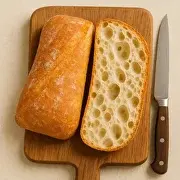
Scroll through social media and you'll see dramatic photos of sourdough with huge, irregular holes.
It's easy to think that adding more water automatically creates better bread.
Unfortunately, dough doesn't work that way.
Every flour has a limit. Strong bread flour can absorb impressive amounts of water, while weaker flour quickly loses structure. Instead of producing an open crumb, the loaf becomes difficult to shape, difficult to score, and often bakes with a damp interior.
Higher hydration is only helpful when the flour—and the baker—can support it.

Sometimes the Bread Is Simply Too Young

This may be the hardest advice to follow because the smell of fresh bread is irresistible.
Fresh from the oven, the crumb is still changing. Steam continues moving through the loaf, starches are setting, and moisture is redistributing itself.
Cutting into sourdough too early interrupts that process.
The knife compresses the soft crumb, steam escapes, and the inside suddenly looks much wetter than it actually is.
Waiting another hour or two can make the very same loaf look completely different.
Sometimes a gummy crumb and a dense crumb have the same root cause. If your loaf is heavy, compact, and sticky inside, take a look at our guide on dense sourdough—it may help you identify what went wrong before the dough even reached the oven.
Why Is My Sourdough So Dense?

Your Flour Plays a Bigger Role Than You Think

Not all bread flour behaves the same way.
Some brands develop strong gluten that supports an open crumb and holds moisture where it belongs.
Others produce dough that feels soft at first but struggles to keep its structure during fermentation.
If you've already adjusted your fermentation, baking time, and hydration but still end up with a gummy crumb, the flour itself may be worth reconsidering.

Learning to Read the Crumb

Every loaf tells a story.
A gummy center isn't simply a failure—it is feedback.
Sometimes it's telling you to bake a little longer.
Sometimes it says the dough needed another hour of fermentation.
Sometimes it quietly reminds you that your flour couldn't handle that extra splash of water.
The more loaves you bake, the easier it becomes to read those clues.
Instead of wondering "Why did this happen?", you'll begin asking a much more useful question:
"What is this loaf trying to teach me?"
Keep Learning About Sourdough
    Almost every sourdough baker has baked a gummy loaf at least once. It's part of learning, not a sign that you're doing everything wrong.
    The important thing is not to change five things at once. Adjust one part of your process, bake again, and compare the results.
    That's how experience is built—one loaf at a time.